
 Pусский
 العربية
 Melayu
 中文
中文
circular economy modular
A circular economy modular approach is a practical and forward-looking way to design, produce, use, and recover products and systems so that resources stay in circulation for as long as possible. Instead of following the traditional linear model of “take, make, use, dispose,” this approach emphasizes reuse, repair, refurbishment, remanufacturing, and recycling. Modularity plays a key role because it allows products to be divided into independent parts or modules that can be easily replaced, upgraded, or reused without discarding the entire system.In a modular circular economy model, products are designed from the beginning with end-of-life and lifecycle extension in mind. Each module can have a specific function, such as power supply, control, structure, or interface, and these modules can be separated when one part fails or becomes outdated. This reduces waste, lowers maintenance costs, and extends product lifespan. For example, if a single component is damaged, only that part needs to be replaced rather than the whole product. This makes repair more efficient and supports resource conservation.One of the main advantages of modular design is flexibility. Products can be updated gradually as technology improves or user needs change, instead of being thrown away and replaced. This is especially valuable in industries where innovation moves quickly, because a modular system can adapt without creating unnecessary waste. Modularity also improves disassembly, which is essential for recycling and material recovery. When components are standardized and easy to separate, valuable materials can be recovered more effectively and returned to manufacturing cycles.A circular economy modular strategy also supports product-as-a-service models. In these systems, users may not own the product outright, but instead access its functions through leasing, subscription, or shared-use arrangements. Because the producer retains responsibility for maintenance, collection, and recovery, there is a stronger incentive to design durable, repairable, and upgradeable modules. This encourages better use of materials and reduces the environmental impact of production and disposal.From an environmental perspective, modular circular systems help reduce raw material extraction, energy consumption, and landfill waste. They support a more efficient use of resources by keeping components in use for longer periods and by enabling higher recovery rates at the end of life. From an economic perspective, they can lower lifecycle costs, create new service opportunities, and improve resilience in supply chains by reducing dependence on virgin materials.Overall, the circular economy modular approach represents a shift toward smarter, more responsible design. It combines sustainability with practicality by making products easier to maintain, adapt, and recover. As industries face growing pressure to reduce environmental impact and improve efficiency, modular circular solutions offer a promising path toward long-term sustainability.
Products
Category:
-
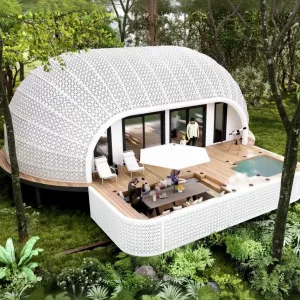
Ready-Made Prefabricated Modular Steel Structure Eco-friendly Fast Install Modern Design Homes for Office Building Villa
Category: Wild Luxury HostelsBrowse number: 57Number:Release time: 2026-10-19 20:08:02High‑performance assembled vacation house with full waterproof & thermal layers. Anti‑wind, anti‑quake, insect‑proof features. Custom colors, multiple styles for apartments & homestays, MOQ 1pc.
News
Category:
No search results found!
Case
Category:
No search results found!
Video
Category:
No search results found!
Download
Category:
No search results found!
Job
Category:
No search results found!
Featured Products
No search results found!



 Phone
Phone