
 Pусский
 العربية
 Melayu
 中文
中文
modular deconstruction
Modular deconstruction is an increasingly important approach in the fields of construction, renovation, and environmental management. It refers to the careful dismantling of a building or structure in a planned, systematic way, with the goal of recovering materials, reducing waste, and enabling reuse. Unlike traditional demolition, which often prioritizes speed and destruction, modular deconstruction focuses on precision, sustainability, and resource efficiency.The core idea behind modular deconstruction is to take a structure apart in sections or components rather than breaking it down all at once. This method is especially effective for buildings designed with standardized parts, prefabricated elements, or modular systems. Walls, floors, panels, beams, and mechanical components can often be removed individually and sorted for reuse, recycling, or responsible disposal. By doing so, valuable materials such as steel, wood, glass, concrete, and fixtures can be preserved instead of sent directly to landfills.One of the major advantages of modular deconstruction is its environmental benefit. Construction and demolition activities generate a significant amount of waste worldwide. Traditional demolition contributes heavily to landfill overflow and carbon emissions associated with material production and transportation. Modular deconstruction helps address these problems by extending the life cycle of building materials. Reusing components reduces the demand for new raw materials, lowers energy consumption, and supports a more circular economy. In this sense, modular deconstruction is not only a technical process but also a sustainable strategy for resource management.Another important benefit is economic value. Although deconstruction may take more time and planning than demolition, the recovered materials can have substantial value. Reclaimed structural elements, architectural features, and mechanical systems can be sold, repurposed, or used in future projects. This can offset labor and equipment costs. In addition, modular deconstruction can create new jobs in material sorting, salvage, logistics, and reuse industries. As awareness of sustainable building practices grows, the market for reclaimed materials is also expanding.Modular deconstruction requires careful assessment before work begins. Professionals typically evaluate the structure to identify which parts can be safely removed and reused. They consider the building’s age, design, material condition, and connection methods. Detailed planning is essential to ensure safety and efficiency. Workers must also follow strict procedures to manage hazards such as asbestos, lead paint, electrical systems, and structural instability. Proper tools and training are necessary because the process often involves more manual labor and technical coordination than conventional demolition.This approach is also closely connected to the principles of design for disassembly. When buildings are planned with future deconstruction in mind, their components can be separated more easily at the end of their service life. Bolted connections, accessible fasteners, and modular layouts make it simpler to recover materials intact. In this way, modular deconstruction is both a method of end-of-life management and an incentive for better design practices from the beginning.In conclusion, modular deconstruction represents a modern, responsible alternative to traditional demolition. It reduces waste, conserves resources, creates value from recovered materials, and supports a more sustainable built environment. As cities continue to grow and old structures are replaced or adapted, modular deconstruction will play an increasingly vital role in shaping the future of construction and environmental stewardship.
Products
Category:
-
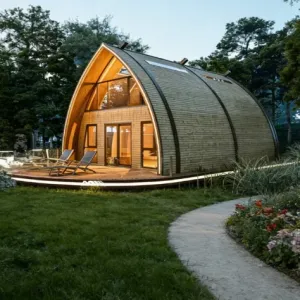
Beautiful Villa Durable Eco-Friendly Irregular Shape Modern Natural Aluminum Prefab House Hotel Camping Vacation Hiking
Category: Modern MinimalistBrowse number: 44Number:Release time: 2026-10-19 20:13:49Thermally‑efficient assembled vacation house keeps comfortable indoor temperature year‑round. Fire‑insect‑damp‑proof, wind‑quake resistant. Various styles for hotel office, MOQ starts at 1 unit.
News
Category:
No search results found!
Case
Category:
No search results found!
Video
Category:
No search results found!
Download
Category:
No search results found!
Job
Category:
No search results found!
Featured Products
No search results found!



 Phone
Phone